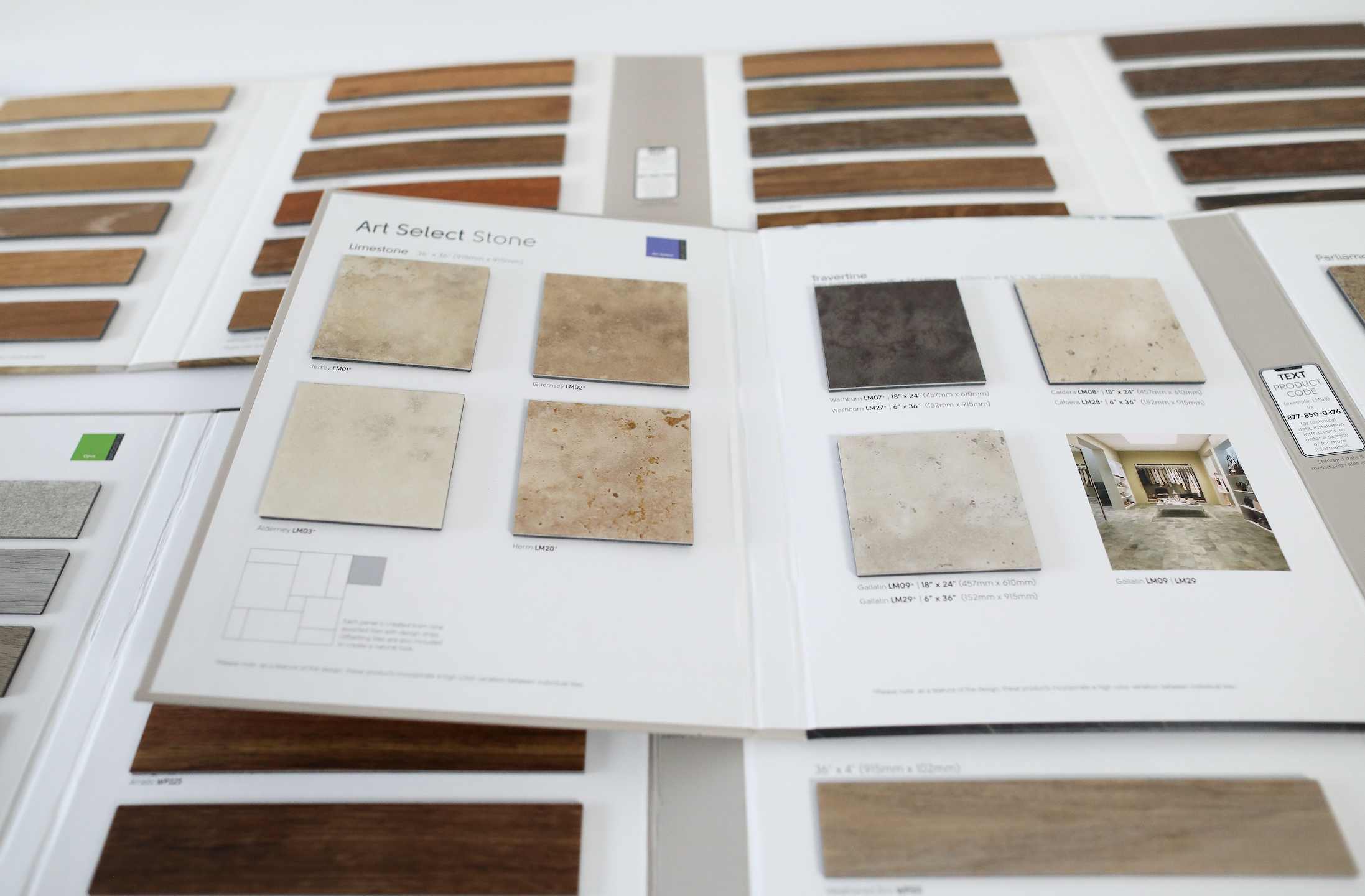
Trade shows are loud, crowded, and overwhelming. Attendees are bombarded with booths, banners, sales pitches, and screens, all competing for attention in just a few seconds. In that environment, trade show samples play a much bigger role than many brands realize, especially in competitive categories like building products.
When designed well, sample boards become a powerful part of trade show booth design, instantly communicating credibility, reducing buyer hesitation, and inviting meaningful engagement without saying a single word.
Let’s dive into how buyers emotionally respond to trade show samples, what design elements create curiosity, and where brands often fall short.
The First Emotional Reaction: Credibility (or Doubt)
When a buyer first interacts with building product samples at a trade show, they’re making a snap judgment, often subconsciously.
“Is this brand legit?”
“Does this feel premium?”
“Is this even what I’m looking for?”
One of the most important goals of any trade show sample board is to establish credibility as quickly as possible. In a trade show setting, you don’t have the luxury of long explanations. Your samples, and how they’re presented, need to tell a story in seconds.
A well-designed board can:
- Instill confidence in the brand
- Remove fear or uncertainty about the product
- Help a buyer quickly confirm whether it’s a fit
A sample board can also help buyers rule something out…and that’s not a bad thing. If someone can touch, feel, and understand your product right away, they can either move forward with confidence or move on without frustration.
It’s like shopping online versus trying something in person. Seeing is one thing. Touching changes everything.
The Importance of Touch and Texture
As marketing has shifted more digital, physical interaction has stood out even more, especially at trade shows.
Texture, weight, finish. These details matter. When a buyer can physically engage with trade show samples, it helps them make decisions faster and with more confidence.
This tactile experience:
- Makes the product feel more real
- Reinforces quality and craftsmanship
- Creates a stronger emotional connection
At trade shows, touch becomes a shortcut to trust. This is where experiential marketing comes into play. If you’ve ever asked, what is experiential marketing?—this is it. It’s about creating hands-on moments that allow buyers to experience a product instead of just hearing about it.
What Actually Stops People at a Booth?
Trade shows are visually chaotic. Attendees are navigating foot traffic, noise, and visual clutter all at once. To break through that noise, your trade show booth design and sample displays need to work from a distance first.
A few elements consistently draw people in:
Strong contrast and color
High contrast and clear color choices help a booth stand out across the aisle. If it blends into the background, it’s already lost.
Simple, intuitive layouts
When someone approaches your booth, they should immediately understand what they’re looking at. If the reaction is “I don’t know what this is,” you’ve lost them.
Clean, premium branding
Design doesn’t need to be flashy, but it does need to feel intentional. Clean branding signals professionalism and quality before anyone says a word.
Clear invitations to interact
The best trade show samples invite participation. “Pick this up.” “Walk in here.” “Feel this.”
That interaction creates a memorable emotional response without overwhelming the attendee.
Craftsmanship Communicates Quality
Straight lines. Clean edges. Consistent finishes. Accurate color.
These details may seem small, but in an environment where attendees expect precision, flaws stand out immediately, especially with building product samples. Poor execution sends the wrong message, particularly for premium products.
If your product is high-end, your sample board needs to feel high-end too. A premium product presented in cheap materials creates disconnect and doubt.
This idea extends to all physical marketing materials. Just like a high-quality architectural folder should match the product inside, trade show samples should reflect the same level of care and quality as the product itself.
Common Design Mistakes That Kill Emotional Engagement
Even brands with large budgets can weaken emotional engagement through a few common missteps:
Using cheap or incorrect materials
Lightweight boards, flimsy folders, or poor finishes undermine premium positioning.
Too much text
Trade shows are not the place for dense copy. Excessive text becomes visual noise and distracts from the samples.
Poor color choices or inaccurate printing
Color accuracy matters, especially when color is part of the product. Inconsistent or poorly printed samples lose trust.
Overcomplicating the story
If your board is trying to explain everything, it’s probably explaining nothing. Let the samples do the talking.
Some of the strongest trade show sample boards rely almost entirely on visual flow: Subtle color progressions, texture changes, and contrast that draw people in naturally. Different buyers engage in different ways. Good design supports both without overwhelming either.
A Strategic Change Brands Should Make
The biggest opportunity for brands heading into their next trade show?
Stop relying so heavily on text-heavy marketing and start investing in physical, experiential displays that support stronger trade show booth design.
Trade shows are loud. Attention is limited. Attendees don’t want to work hard to understand what you’re offering.
The brands that stand out create environments that feel:
- Seamless
- Comfortable
- Easy to engage with
- Unique, without being overwhelming
When attendees don’t have to think too hard and can simply interact with building product samples, they stay longer, remember more, and connect emotionally.
Make It Easy to Feel Something
At the end of the day, great trade show samples create moments.
Moments of clarity. Moments of confidence. Moments where an attendee thinks, “Yeah, this feels right.”
In a trade show environment full of noise, the brands that succeed are the ones that make engagement effortless and let their products speak for themselves.
If you’re rethinking how your brand shows up on the show floor, contact Sampco to make your samples work harder for you.