Trade shows are packed with options. Roofing manufacturers are competing aisle by aisle for the attention of architects, contractors, and specifiers who have seen everything. In that setting, your roofing sample boards have to work hard.
The most effective roofing sample boards today are designed around real project pain points, not just colorways or SKUs. When done right, these trade show samples act as a silent salesperson: answering questions, proving performance, and building confidence without relying on a sales rep.
Here’s why pain-point– driven roofing sample boards outperform traditional boards at trade shows—and what makes them work.
Roofing Material Evaluation
Architects, contractors, and specifiers must consider a long list of factors when evaluating roofing systems. It’s never just about looks.
They’re weighing:
- Wind, fire, and impact ratings
- Code compliance by region
- System compatibility with underlayments, adhesives, and fasteners
- Installation complexity and crew efficiency
- Long-term performance, warranties, and manufacturer credibility
- Product availability and lead times
On top of all that, they’re balancing the end customer’s preferences and expectations.
That’s a lot to process, especially in a trade show environment where attention spans are short, and comparisons are happening in real time. Walking from booth to booth, attendees are constantly asking themselves,: “Why this product over the next one?”
This is where thoughtfully designed roofing sample boards make a difference.
Why Spec Sheets and Brochures Aren’t Enough
Spec sheets are necessary, but they’re not persuasive on their own. Many of the most critical roofing questions can’t be answered on paper.
Things like:
- True color and granular blend
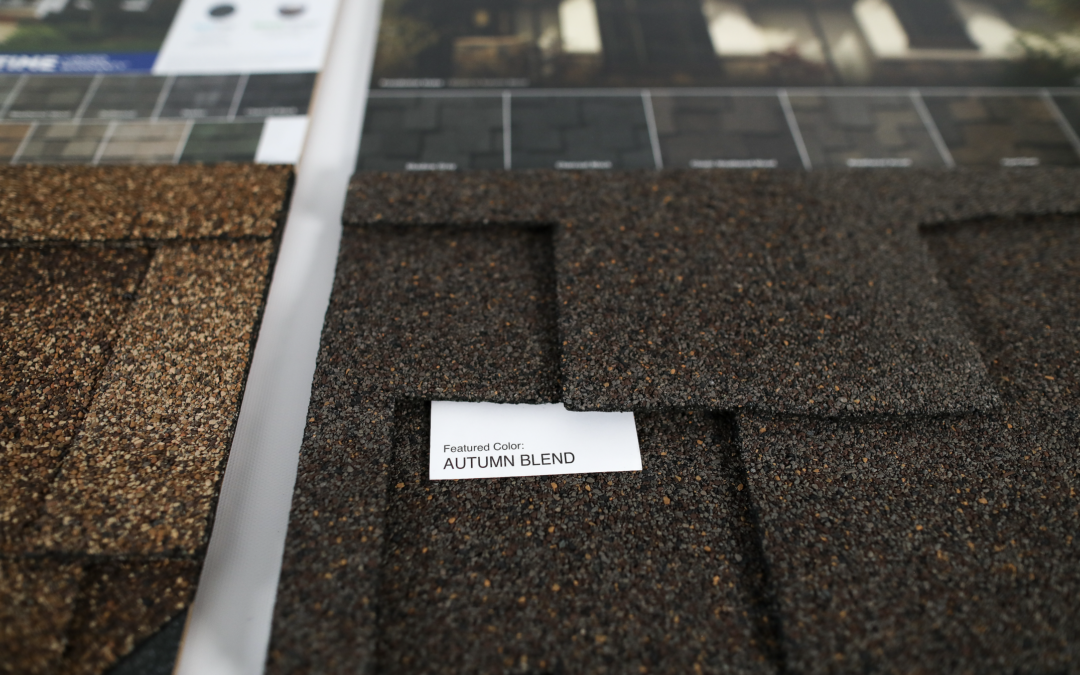
- Texture and surface feel
- Thickness, rigidity, and edge detail
- Reflectivity under different lighting conditions
These are tactile, visual qualities. You can’t fully understand them through a brochure or printed image. You have to see them. Touch them. Compare them side by side.
That’s why physical trade show samples, especially well-crafted roofing sample boards, remain essential in building product marketing.
What Makes a Pain-Point-Driven Roofing Sample Board Different
A traditional roofing sample board often focuses on displaying a few shingles, a color palette, and maybe a logo. A pain-point-driven board tells a story about performance.
Instead of answering, “What colors do we offer?” it answers:
- How does this system get installed correctly?
- How does it reduce risk for crews and owners?
- How does it meet code and insurance requirements?
- Why will this roof last longer in real-world conditions?
One powerful example is the use of clearly defined nail zones or strike zones on shingles. When highlighted directly on a roofing sample board, this feature instantly communicates value.
Contractors can immediately see how it:
- Speeds up installation
- Helps crews consistently hit the proper fastening area
- Reduces installation errors
- Supports long-term performance and warranty compliance z
For manufacturers, these trade show samples reinforce that proper installation leads to better outcomes—solving a real problem for multiple audiences at once.
Why This Approach Works at Trade Shows
Trade shows create a unique environment. Attendees are:
- Comparing products back-to-back
- Making fast judgments
- Absorbing information visually before verbally
- Often walking booths without a sales rep present
A roofing sample board has to make an impact immediately.
When trade show samples are designed around real challenges—installation accuracy, code acceptance, performance ratings—they stand out faster. Attendees don’t have to hunt for answers or ask basic questions. The board does the work for them.
This especially matters because roofing sample boards don’t just live on the trade show floor. After the event, they often end up in distributor showrooms, sales offices, and contractor spaces, where they still need to communicate clearly, sometimes without anyone there to explain them.
When Roofing Sample Boards Eliminate Questions
One of the clearest signs a roofing sample board is working is when certain questions stop being asked.
When boards clearly call out:
- Impact, fire, and wind ratings
- Insurance or regional acceptance
- System layers and installation logic
- Key performance differentiators
Architects and builders don’t need to ask, “Is this approved?” or “How does this get installed?” The answers are already there, leaving more time for more meaningful discussions.
That builds trust and shows the manufacturer understands the real-world concerns their audience faces on every project.
Craftsmanship Is Part of the Message
How a roofing sample board is built matters just as much as what it shows.
Crooked lines, sloppy mounting, or inaccurate representations quietly undermine trust. If a roofing system is designed to install straight and precisely, the sample board should reflect that same level of precision.
Clean lines, accurate layering, and thoughtful layout signal professionalism and quality. For visually driven decision-makers, even small inconsistencies in trade show samples can become brand detractors.
A Demo Without the Demo
Roofing trade shows often feature full mock-up roofs and live installations. Roofing sample boards don’t replace those experiences, but they complement them.
In many ways, a strong sample board acts like a demo without being a demo. It condenses the most important performance stories into a format that’s always accessible, consistent, and on brand.
Show You Understand
At crowded trade shows, roofing manufacturers win by showing understanding.
When trade show samples are designed to solve real problems rather than simply display products, they become a highly strategic sales tool.
And in an environment where attention is scarce and comparisons are constant, that makes all the difference.
Contact us today and make your next trade show count.