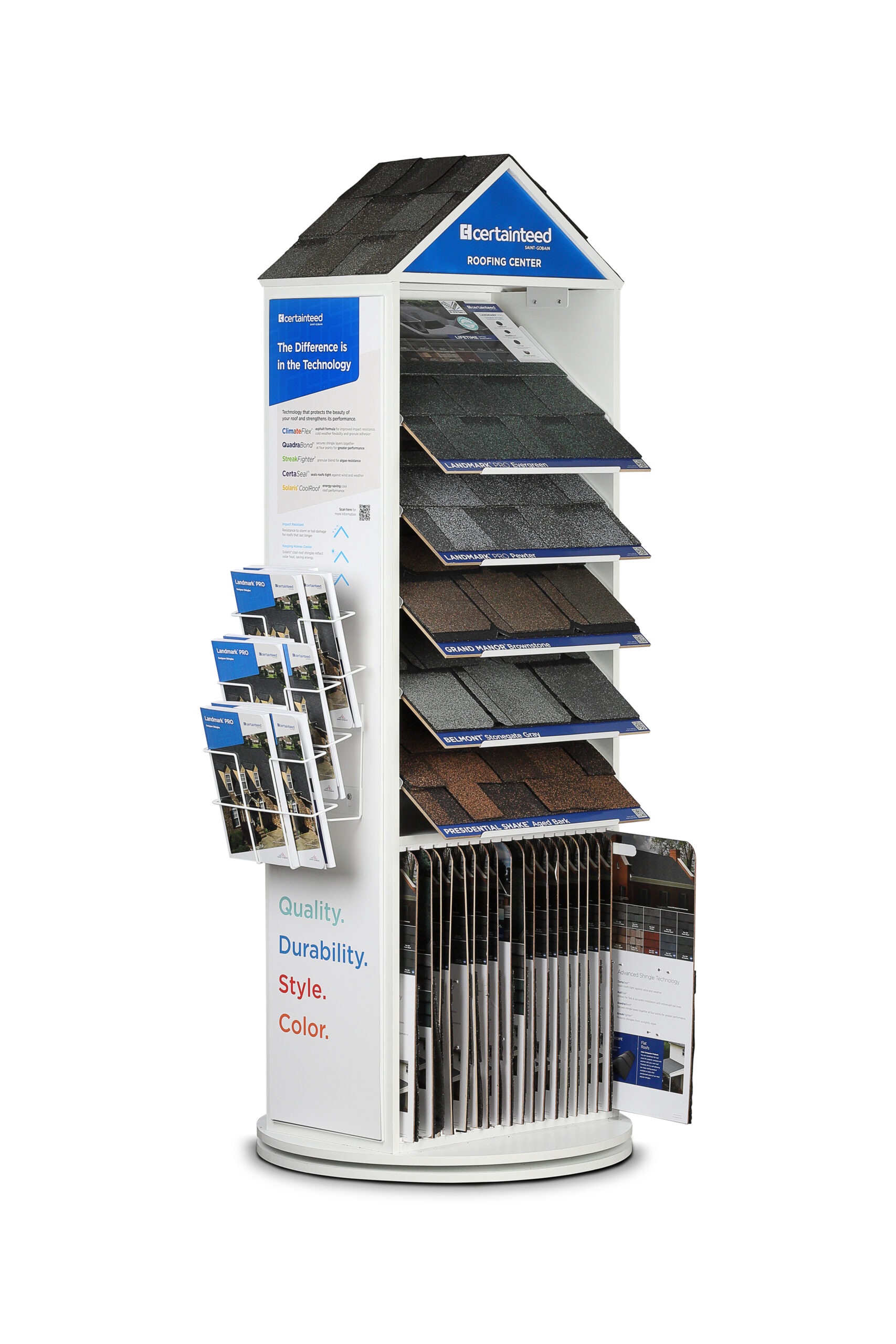
There’s no shortage of technology helping manufacturers sell building products. 3D renderings, AI visualizers, virtual showrooms, augmented reality, and interactive product configurators are all very impressive. And they’re all valuable when utilized properly.
The reality is buyers want to touch the product before making a final decision. No matter how good a product looks on screen, it can’t answer one simple question: “Is this really what I’m getting?”
For building product manufacturers, that’s where physical samples continue to complement digital experiences.
Digital Tools Inspire Interest. Physical Samples Close the Sale.
Digital tools have transformed the early stages of the buying journey. Architects can compare options faster. Contractors can explore products online. Homeowners can upload a photo of their house and visualize different roofing, siding, or flooring options. But without a physical sample following that experience, sales can hit a wall.
“Digital tools generate the interest, but the physical samples are what help close the deal,” said Frank Knight, Associate Sales Leader at Sampco. “The closer someone gets to making a purchasing decision, the more confidence matters.”
Expensive Decisions Demand Real Confidence
Most building products aren’t impulse purchases. When tens of thousands of dollars are on the line, there’s a responsibility to get it right, not to mention; reputations are on the line. People naturally look for ways to reduce risk before committing. Holding the actual product does exactly that—those aren’t details you can fully experience on a screen.
Physical samples give confidence from:
- Feeling the texture
- Seeing the real color
- Understanding the finish
- Watching how light affects the appearance
“When you touch something, it builds confidence in the product…,” Knight explains. “Seeing and feeling it helps instill that confidence.”
Our Brains Trust What We Can Touch
There’s psychology behind physical samples. People place greater trust in products they can physically interact with. The moment someone holds a sample, the product becomes real. It’s no longer a rendering on the screen or picture you’ve shared. When a product is in hand, the reality of deciding sets in. That tactile experience removes uncertainty in a way digital images simply can’t replicate.
Not All Colors Look Alike
One of the biggest challenges with digital selling is accuracy. The same product can look different when viewed on a phone, laptop, desktop, or tablet. Even brochures can portray a difference when compared to real samples.
Building product manufacturers recognize this and include disclaimers about color variation and recommend viewing actual samples before purchasing. Knight points out that these disclaimers have become commonplace because digital representations can only go so far.
Physical samples remove much of that uncertainty. They let buyers see the actual color, texture, gradients, and finish under real lighting conditions, not just the lighting inside a computer-generated image.
AI Makes Physical Samples Even More Important
Artificial intelligence is making visualization tools more powerful than ever. But it also introduces a new challenge. Can buyers trust what they’re seeing?
Authenticity becomes even more valuable as AI-generated visuals become more common. If a digital rendering can’t perfectly represent grain, texture, color, or material characteristics, it creates another layer of uncertainty. A physical sample doesn’t have that problem. It is the product. It gives customers the ultimate confidence that they are making the right decision.
The Best Buying Experiences Combine Both
The strongest building product manufacturers use both digital tools and physical samples. For example, this can come together when a sample board utilizes QR codes to launch a visualization tool.
A homeowner can hold the roofing sample while they are uploading a picture of their own house to see how that exact product will look after installation. It provides context, makes the product relevant, and reassures that the right decision is being made.
In the end, digital tools and physical samples create a buying experience that’s far more effective than either could deliver alone.
Create Sample Experiences That Build Buyer Confidence
Sampco has spent decades building sample boards, folders, and marketing tools that help building materials brands win the moment. And pairing them with digital tools makes physical samples even stronger. See what your solution could look like by talking to one of our team representatives.