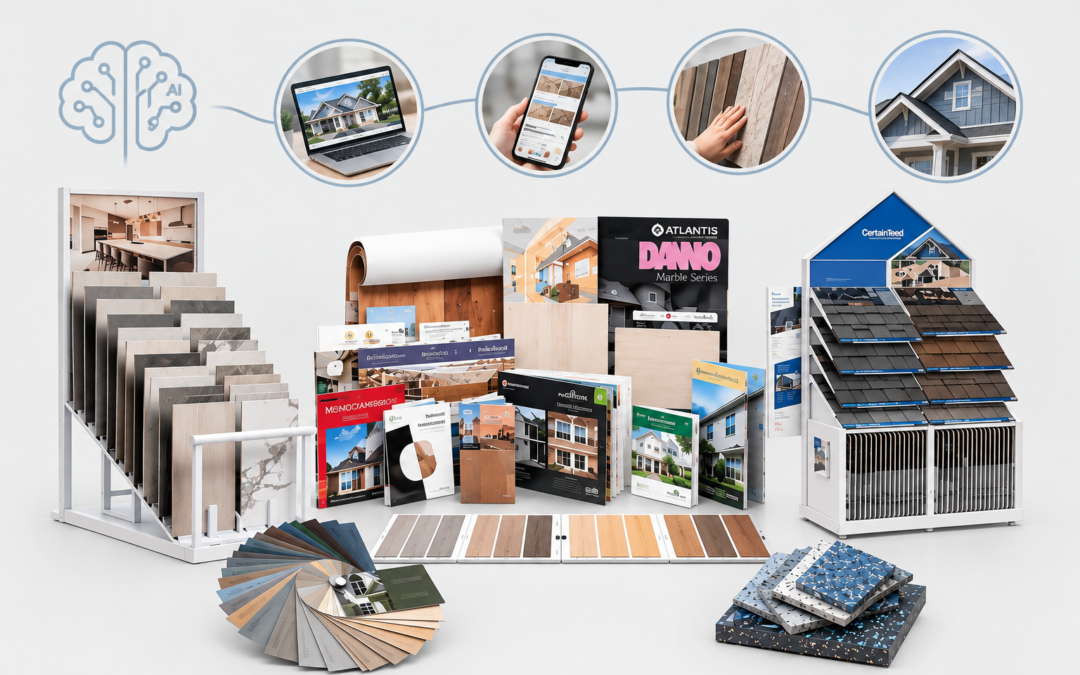
AI is changing how architects, designers, and contractors discover and compare building products. Instead of searching for a specific manufacturer or product name, buyers can describe a project challenge and receive recommendations, comparisons, and technical information in seconds. That creates new opportunities for manufacturers to get discovered, but it also raises questions about what happens after a product catches a buyer’s attention.
But a screen can only tell you so much. When a project, and a reputation, is riding on a product, buyers still want to hold it in their hands. Here’s how the buyer’s journey is shifting and what manufacturers can do to make their sampling programs work harder.
Discovery Has a New Starting Point
For years, discovery followed a familiar path: trade shows, sales rep visits, sample kits, and brands buyers already knew and trusted. That path hasn’t disappeared. Brand loyalty runs deep with this audience, and physical samples and face-to-face conversations still carry real weight.
What’s changing is how buyers discover unfamiliar products. AI-powered search can introduce manufacturers that weren’t previously on a buyer’s radar, particularly when they’re researching a specific application, performance requirement, or project challenge. That gives brands another opportunity to get considered, even when buyers aren’t searching for them by name.
Buyers Are Asking for Solutions, Not Products
Here’s where AI search really breaks from traditional search: buyers aren’t just typing in product names. They’re problem-solving. Their questions are messy, open-ended, and focused on the outcome. They want a solution first; the product comes second.
AI can also help buyers quickly compare specifications and performance requirements. But manufacturers still need to make it easy to verify that information. Clear technical documentation, application guidance, and accessible product samples help buyers move from an AI-generated recommendation to evaluating whether a product actually meets their needs.
For more on why physical samples remain essential to product evaluation, read Why You Need Physical Samples in a Digital World to Close the Sale.
Make the Transition From Discovery to Sampling Easier
Discovering a product is only the beginning. Once buyers identify a potential solution, they need a clear path to the information and materials required to evaluate it.
For manufacturers, that means making samples easy to request, providing the right product information, and reducing unnecessary steps between initial interest and physical evaluation. A buyer researching flooring, for example, shouldn’t have to navigate multiple pages or contact a sales rep just to figure out how to obtain a color or finish sample.
Fulfillment matters, too. Accurate inventory, organized sample programs, and dependable delivery help manufacturers respond when buyers are ready to evaluate their options. And when samples arrive, clear labeling, technical information, and relevant product resources make them more useful throughout the decision-making process.
Make Your Sampling Program Work Harder
Start by getting found. If buyers are kicking off their research with AI, your products need to show up in AI-generated recommendations and show up accurately. It starts with clear, consistent, and up-to-date product information across your website, and the third-party sources buyers rely on to research and compare products.
Next, make sure samples connect buyers to the resources they need. QR codes or links to installation instructions, technical specifications, product comparisons, and visualization tools can help buyers continue their evaluation without starting their research over. The goal is to make the sample part of a connected buying experience rather than a standalone marketing piece.
Finally, put sample request data to work. Tracking which products are requested, where demand is coming from, and which customer segments are showing interest can help manufacturers identify opportunities. Marketing teams can use those insights to refine campaigns and sample offerings, while sales teams can prioritize follow-up based on the information collected during the request process.
Turn Product Discovery Into Opportunity
AI is creating new ways for building products to get discovered, but manufacturers still need to turn that interest into meaningful engagement. Making product information accessible, simplifying sample requests, and using request data to guide marketing and sales efforts can help bridge that gap.
For manufacturers, the opportunity isn’t just to get discovered. It’s to make every step that follows easier for the buyer.
Is your sampling program keeping up? Sampco helps building product manufacturers create and manage sample programs that support buyers throughout the decision-making process. Contact our team to explore opportunities to improve your program.